ThermNight 4K Just Dropped: Is One Scope for Day, Night & Thermal Finally Worth It?
Legal Disclaimer: This article provides only general and high-level explanations for educational and informational purposes. It is not legal advice, firearms training, hunting advice, ballistic advice, or a recommendation for any particular product or use. Laws, regulations, licensing requirements, hunting rules, and safe-use obligations may vary by jurisdiction and individual circumstances. You should not rely on this content as legal advice, and you should seek guidance from a qualified attorney, licensed firearms instructor, and other appropriate professionals before making decisions involving firearms, optics, hunting, or night-vision equipment. You remain responsible for understanding and complying with all applicable laws, rules, manufacturer instructions, and range or landowner requirements.
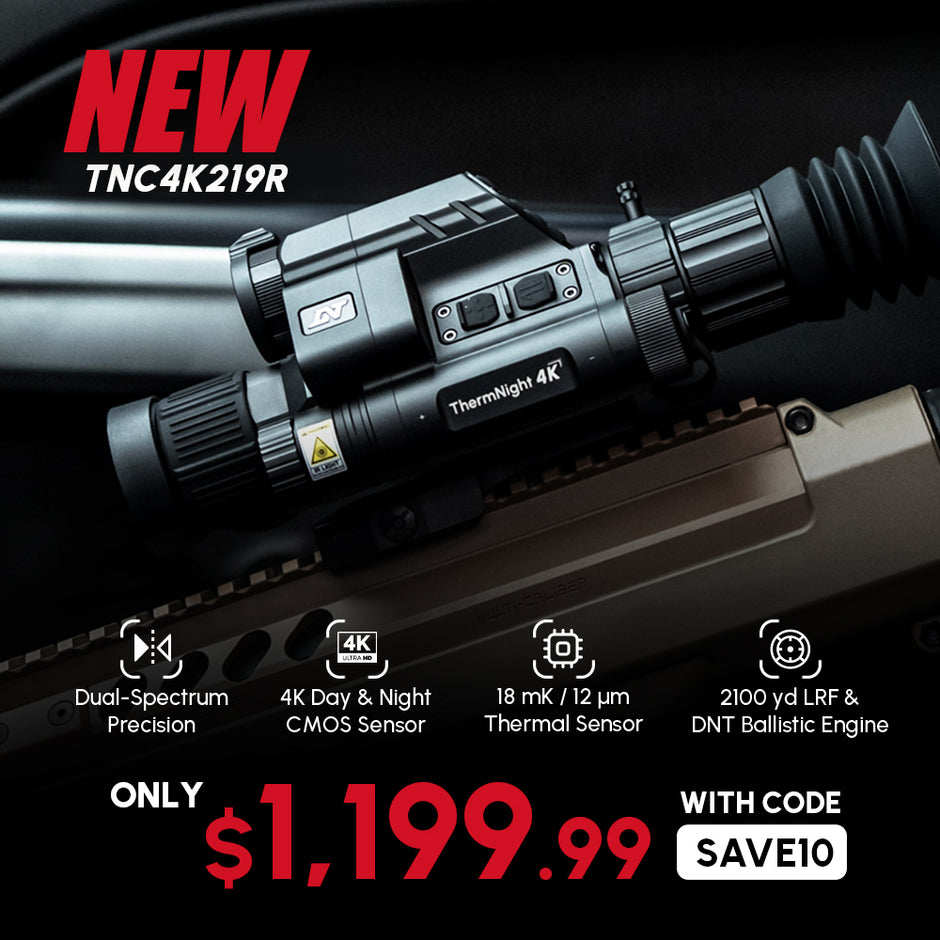
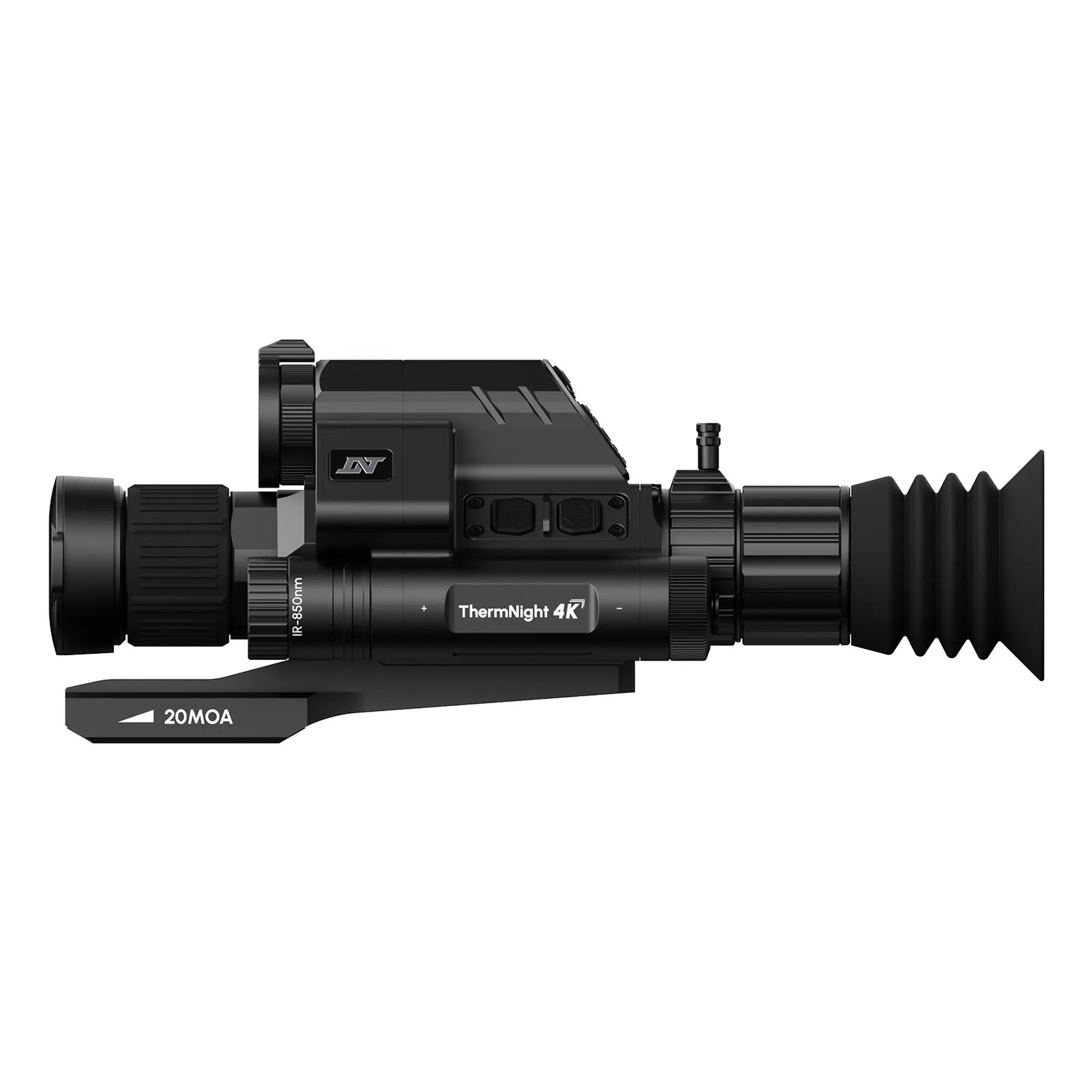
The DNT ThermNight 4K (TNC4K219R) arrived in mid-August 2026 with a bold promise: combine a high-resolution day/night optic, thermal imaging, a long-range laser rangefinder, and ballistic assistance in one compact platform.
That is a lot to ask from a single scope. Having said that, this new multispectral optic may be one of the most interesting launches of the year for hunters, firearm enthusiasts, and anyone who wants one flexible sighting system instead of several specialized devices.
At AnyTime Optics, we are getting out in front of this launch because it fits a question we hear constantly at gun shows: Can one scope really handle daylight, darkness, and thermal detection without becoming too complicated, too bulky, or too expensive?
What Makes the ThermNight 4K Different?
The ThermNight 4K is a multispectral optic (an optic that combines more than one imaging technology). Instead of choosing between a traditional day scope, a digital night vision scope, and a thermal scope, you can access multiple viewing channels through one device.
Its key systems include:
- 4K digital day/night vision using a 3840 × 2160 sensor
- 256 × 192 thermal imaging
- Integrated laser rangefinder (LRF) rated from approximately 5 to 2,100 yards
- DNT Ballistic Engine for displayed ballistic solutions
- DNT app connectivity for ballistic profiles
- 3–24× advertised magnification range
- Built-in 64 GB storage
- 21700 rechargeable battery
- IP67-rated construction (protection against dust and water exposure)
- Recoil rating advertised up to .50 BMG
Generally speaking, the most important advantage is not that every channel does the exact same job. The advantage is that each channel may be useful at a different point in your observation process.
Thermal may help you locate a heat signature. Digital day/night vision may provide more detail for identification. The rangefinder may provide distance information, while the ballistic engine may help display a corresponding holdover or adjustment suggestion.
4K Day and Night Vision: More Than a Marketing Number
The “4K” in the name refers to the digital day/night imaging channel, not the thermal resolution. That distinction matters.
The ThermNight 4K uses a 3840 × 2160 digital sensor, which may provide a sharper image than older 1080p digital night vision systems in suitable conditions. In daylight and available-light situations, that extra resolution can be useful for viewing terrain, equipment, and other visual details.
At night, the optic may be used with an IR illuminator (infrared illumination that is generally invisible to the unaided human eye). The product information reviewed for the launch describes an integrated IR illuminator with visibility extending to approximately 450 yards, although real-world performance may vary with weather, terrain, target contrast, and atmospheric conditions.
This is where a modern day night scope may appeal to you. You may not need to remove one optic and replace it with another as conditions change. Instead, you can switch between digital viewing and thermal viewing from the same mounted unit.
Having said that, 4K digital night vision is not the same technology as thermal imaging. Digital night vision generally depends on available light or IR illumination, while thermal imaging detects differences in heat. Each channel has different strengths, limitations, and ideal applications.
Thermal Imaging for Detection and Awareness
The thermal channel uses a 256 × 192 uncooled thermal detector with a reported sensitivity of up to 18 mK under stated test conditions. You should treat specifications such as NETD (noise equivalent temperature difference) as useful comparison points, rather than guarantees of identical field performance.
Thermal imaging may help you detect heat signatures in darkness, light vegetation, or changing weather conditions. It can also provide a different perspective from the 4K digital channel, which is valuable when you are scanning an area and trying to understand what is actually in front of you.
The ThermNight 4K’s thermal field of view is wider than its digital channel at certain settings. That may help with general scanning and situational awareness, while the digital channel can be used for more detailed viewing when conditions support it.
The ability to switch between channels, or use picture-in-picture (PIP), where one image appears inside another, may reduce the need to carry a separate thermal monocular and night vision device. For hunters and outdoor users, less equipment may mean less weight, fewer mounting decisions, and a simpler setup.
Still, no thermal scope or night vision scope can replace responsible identification, safe handling, or knowledge of your surroundings, and much, much more.
The 2,100-Yard Laser Rangefinder and Ballistic Engine
The integrated laser rangefinder is one of the ThermNight 4K’s standout features. The launch specifications list a ranging distance of approximately 5 to 2,100 yards.
A laser rangefinder scope may be especially useful when distance is difficult to estimate visually. Once a range is obtained, the DNT Ballistic Engine may use your selected ballistic profile to display a suggested holdover or adjustment.
You generally need to enter appropriate data for your rifle, ammunition, sight height, environmental conditions, and other variables before relying on any electronic ballistic calculation. The DNT app is designed to help you create and manage ballistic profiles, with the optic supporting multiple synced profiles according to product information.
That convenience may save time in the field, but it does not eliminate the need to verify your setup. Your actual point of impact can differ from an electronic calculation because of ammunition variation, zeroing errors, temperature, wind, equipment changes, or incorrect profile data.
This is educational information only and is not ballistic or legal advice. You should not rely on this article for a firing solution, and you should consult a qualified instructor or ballistic professional for guidance specific to your equipment and circumstances.
Is It Actually Compact?
At approximately 26 ounces and 7.7 inches long, the TNC4K219R is not a featherweight micro optic, but it may be compact compared with carrying several separate systems.
That compact approach is central to AnyTime Optics’ lineup. We have consistently focused on making advanced thermal and night vision technology more accessible in smaller packages, from compact thermal devices to multispectral systems designed for flexible use.
For comparison, our TNC225 is a compact thermal and night vision multispectral clip-on with a 256 × 192 thermal sensor. The TNC335 adds a 384 × 288 thermal sensor and ballistic calculator, while the TNC635 moves into a 640 × 512 thermal sensor and integrated laser rangefinder configuration.

The ThermNight 4K adds a notably high-resolution digital channel to this general concept. Whether that is worth prioritizing may depend on how often you move between daylight, low light, and thermal viewing.
How Does the Value Compare?
The TNC4K219R enters a market where prices can rise quickly as thermal resolution, rangefinding, and software features increase. Launch listings reviewed in August 2026 have placed the ThermNight 4K roughly in the $1,200–$1,400 range, although availability and pricing may change.
AnyTime Optics’ broader optic range generally spans approximately $599 to $2,843, giving you options from budget-friendly thermal systems to more advanced premium units.

For someone who only needs basic nighttime visibility, a lower-cost thermal optic may make more sense. For someone who wants a premium sensor, long-range identification, and advanced software features, a higher-end unit may be more appropriate.
There is also a practical value angle in our day-scope-with-night-vision offerings: a setup priced around $400 may give you day-scope capability with night vision, compared with traditional day scopes that often start above $300. That does not make every system interchangeable, but it shows how much more accessible multi-condition viewing has become.
Who Should Consider the ThermNight 4K?
The ThermNight 4K may be worth a close look if you:
- Want one optic for changing light conditions
- Prefer digital detail during the day and thermal detection at night
- Value an integrated laser rangefinder
- Use multiple ballistic profiles
- Want to reduce the number of devices on your equipment list
- Attend gun shows and enjoy testing emerging optics technology
- Need a versatile platform for lawful hunting, training, or outdoor observation
On the other hand, a dedicated day scope, standalone thermal monocular, or specialized night vision setup may still be preferable if you prioritize maximum performance in one specific category, minimal electronics, lower weight, or a particular mounting configuration.

The AnyTime Optics Take
So, is one scope for day, night, and thermal finally worth it?
For many enthusiasts, the answer may be yes, especially if versatility and equipment consolidation matter to you. The DNT ThermNight 4K brings together features that previously required multiple devices: 4K digital day/night imaging, thermal detection, a 2,100-yard laser rangefinder, and a ballistic engine.
It is not designed to make every dedicated optic obsolete. Rather, it may give you a practical middle ground between a basic budget thermal scope and a more expensive collection of separate systems.
As an early source for the ThermNight 4K launch, AnyTime Optics is excited to help you compare this new model with the rest of our compact thermal and multispectral lineup. You can browse all products, compare available optics, or contact AnyTime Optics with questions about product features and availability.
Please remember that this article contains only general and high-level explanations, not legal advice or professional equipment advice. You should not rely on it for your specific circumstances; seek qualified legal counsel, firearms training, and manufacturer guidance before making decisions, and much, much more.