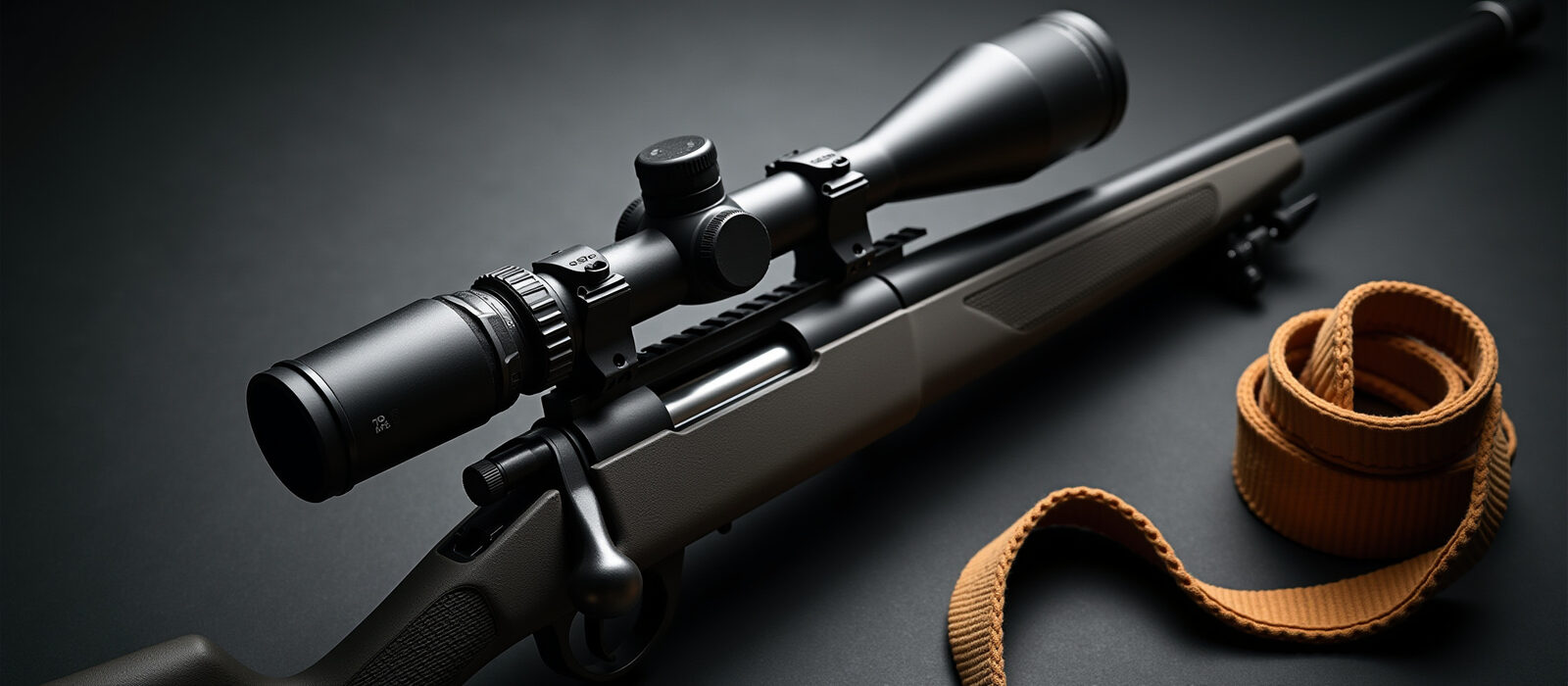
Red Dot Sight Upgrades for Your Hunting Rifle: When Iron Sights Aren't Enough

Important legal disclaimer: This article provides only general and high-level explanations for educational purposes. It is not legal advice, gunsmithing advice, or a substitute for instruction from a qualified professional. Hunting and firearm laws may vary by location and circumstance, and you are responsible for checking the rules that apply to you. Do not rely on this article as legal advice; consult qualified legal counsel for advice about your specific situation. You are also responsible for deciding whether any optic or firearm setup is suitable for your needs and for using it safely.
Iron sights have carried hunters afield for generations, and a familiar scope may still serve you well. But if a fast, close-range opportunity is hard to pick up with your current setup, a red dot sight for rifle use may be worth considering. The key is matching the optic to your likely conditions, not assuming that a newer sight is automatically an upgrade.
When an Upgrade May Make Sense
A red dot may suit you if your hunts often involve short sightlines, quick encounters, and clear openings that appear briefly through cover. With a red dot sight (RDS), you see an illuminated aiming point superimposed on the view through the optic. Most models do not magnify. Many hunters find that this style can make it easier to keep both eyes open and maintain a broad view of the surroundings while bringing the rifle to a comfortable sight picture.
That may be a meaningful change if your iron sights feel slow to align, your eyesight makes the front sight difficult to focus on, or an older scope has become unreliable, foggy, damaged, or awkward to use from field positions. A red dot can also feel less restrictive than a conventional scope because it generally does not require you to position your eye at one exact distance behind the optic.

Still, the benefit is personal. A red dot does not automatically make you faster or more accurate. If you already acquire a clear sight picture quickly with dependable iron sights or a familiar scope, changing equipment may not help you. Consider the difference in your own handling and comfort, and much, much more.
What a Red Dot Does Well in Close Cover
In brush or timber, a quick sight picture may matter more than magnification, especially when your expected opportunities are at short distances and the target is visible through an unobstructed opening. The open view around a red dot can help you keep track of the broader scene, while the illuminated aiming point offers a simple reference.
This can be appealing if a traditional scope feels slow to bring into view or if its eye position feels limiting when you are using an awkward field position. Having said that, the dot is only an aiming reference. It does not make an animal easier to identify, reveal details hidden by vegetation, or make an unsafe shot safe.
Before choosing a red dot, consider the rifle’s purpose, your typical terrain, expected distances, and the conditions in which you hunt. A compact sight may suit a lightweight hunting rifle, while a large or high-mounted optic may feel cumbersome or catch on equipment. It may also be helpful to check the optic’s window size, brightness controls, battery requirements, and compatibility with your rifle and mount. Your preferences around fit, weather resistance, simplicity, and field of view matter, and much, much more.
Know the Limits: No Magnification, No Extra Detail
The most important limitation is straightforward: a non-magnifying red dot does not enlarge the target. You may see the aiming point clearly while still having difficulty making out an animal against branches, shadows, or a busy background. That distinction matters. A dot can help you aim at something you can already see; it cannot supply missing detail.
Distance is therefore a question of visibility and identification, not just whether the dot appears to sit on the target. A close-range setup may be a reasonable fit for some hunting conditions, but no single distance works for every rifle, hunter, animal, or environment. The Game & Fish overview of red-dot optics notes that non-magnifying sights may become less suitable as distances extend, particularly when cover makes precise visual resolution more difficult.
Low light, rain, snow, mud, and condensation can also complicate the sight picture. A bright dot that seems easy to see in daylight may appear too intense in dimmer conditions, and an exposed lens may need attention if it becomes obscured. The optic also depends on a battery, so you’ll need to understand its power requirements and keep the sight in working condition according to the manufacturer’s guidance.
A low-power variable optic (LPVO) or traditional scope may be a better fit if your hunting routinely calls for magnification or if you expect uncertain distances and want more visual detail. This is not a universal rule; the right choice depends on your terrain and needs. For a field-oriented discussion of how sighting systems fit different hunting styles, see Big Woods Bucks’ optics overview. The value of an optic depends on what you can clearly and responsibly identify, not merely how quickly you can place an aiming point, and much, much more.
Choosing a Red Dot for Your Rifle
If you decide to compare red dots, start with the rifle and the hunt rather than a list of features. Confirm that the sight and mounting system are compatible with your firearm, and review the manufacturer’s specifications for durability, weather protection, battery type, and operating controls. If you are uncertain about fit or installation, a qualified gunsmith may help you assess the options.
Reticle size and brightness adjustment may also deserve attention. A very bright or large aiming point could make it harder for you to see the precise area you intend to aim at; too dim a dot may be difficult to pick out in bright conditions. Try to evaluate the sight in lighting similar to your expected use, where possible, and follow the manufacturer’s instructions.
Once installed, a sight should be checked in a safe, controlled setting in accordance with its manufacturer’s guidance, with appropriate supervision or professional help if you need it. Practice with your own rifle and setup before hunting, and confirm that the sight remains secure and functions as expected. Keep the firearm pointed in a safe direction and follow all applicable safety rules. These are general considerations, not a substitute for professional training or advice. A useful buying checklist may include mounting compatibility, optic durability, visibility, battery logistics, and your own comfort, and much, much more.
How a Red Dot Fits Into Your Optics Lineup
A red dot can be one option in a broader set of optics rather than the right answer for every hunt. You might prefer a non-magnifying sight for one rifle and conditions, while choosing a day scope or another optic for a different purpose. Thermal and night-vision products are also distinct options for particular applications; whether and how they may be used for hunting depends on local rules and your circumstances. Do not assume that one optic replaces another.
At AnyTime Optics, you can explore firearm optics that include red dot and reflex sights, thermal scopes, night vision, and day/night systems. The company emphasizes competitive pricing and showcases products at gun shows. AnyTime Optics also holds an FFL Class 7 license for customized firearms; for details about current products or services, contact the team directly. An FFL credential is not legal guidance, and you should seek professional legal counsel about requirements that apply to you.

A Practical Upgrade, When It Fits
A red dot sight may make sense when your current irons or older scope leave you struggling with a quick sight picture in close-range hunting conditions. Its strongest appeal is a simple, illuminated aiming point and an open view, not magnification or extra target detail. If those limits do not fit your hunting needs, keeping your current sight or considering a magnified optic may be more appropriate.
Take time to compare options and think honestly about where, when, and how you hunt. Any equipment decision should reflect your specific circumstances, safe handling practices, and applicable laws. For questions about available optics or custom firearm services, reach out to AnyTime Optics; and much, much more.